How to scale AI automations without losing control and traceability
The first automation is easy. The tenth is where it breaks down.

Iago Mussel
CEO & Founder
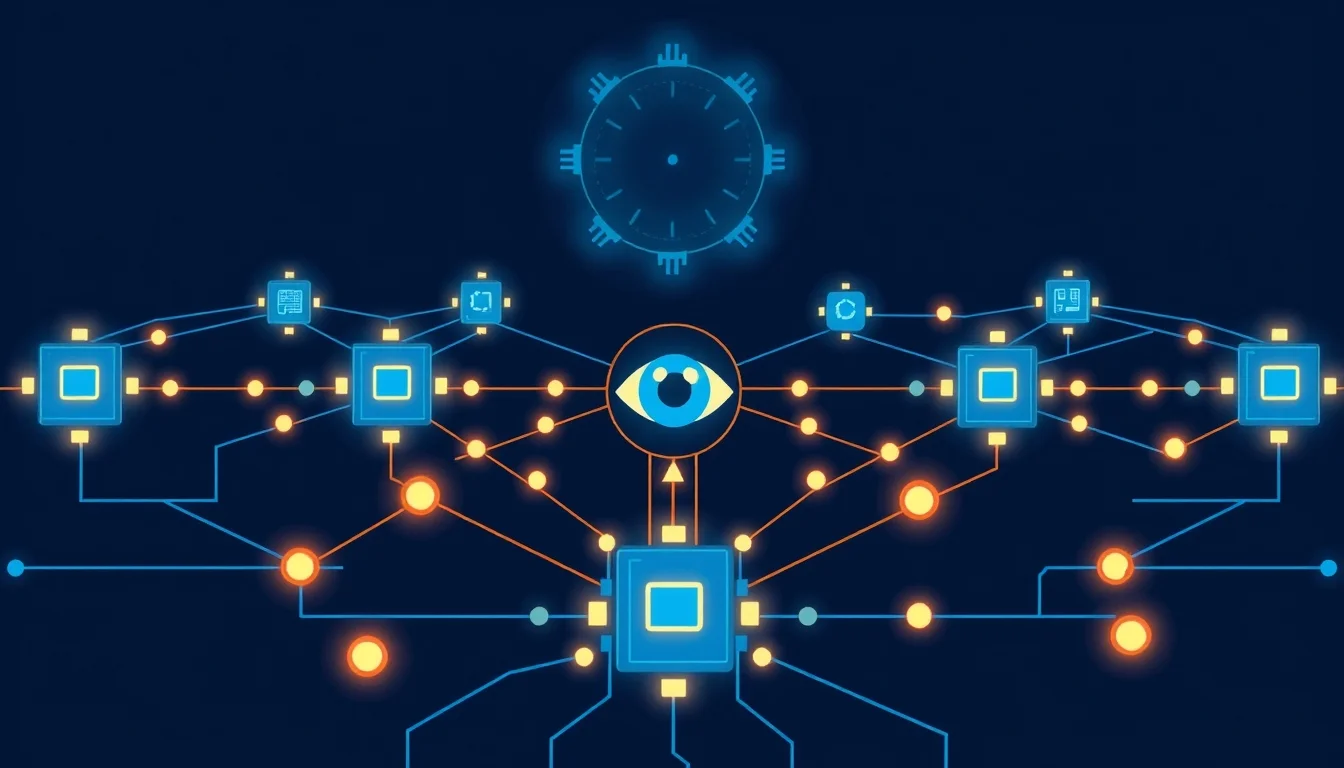
The first AI automation is a proof of concept. The tenth is a dependency.
When you have one workflow, you know it intimately. You built it. You know where the edge cases are. If it breaks, you know exactly where to look.
At ten workflows, you have processes depending on other processes. Inputs from sources you don’t fully control. Outputs feeding downstream systems that break silently when the automation produces something unexpected. And a team that’s grown beyond the one person who understood the original design.
That’s when the control problem becomes real. And most teams don’t have an answer ready.
Why AI automations fail differently than normal software
Traditional software fails loudly. An exception gets thrown. A process crashes. A 500 error comes back. The failure is visible and urgent.
AI automations fail quietly. The model returns a plausible-looking answer that’s wrong. The classification is off by one category. The summary omits the critical detail. The agent takes an action that’s technically valid but not what the business intended.
These failures don’t throw exceptions. They create downstream errors that surface hours or days later, in a different system, with no obvious connection to the automation that caused them.
The solution isn’t fewer automations. It’s building observability into every single one from the start.
The minimum you need in production
Every AI automation running in production needs four things.
An immutable run log. For every execution: input, output, model used, timestamp, duration, and cost. This is your audit trail. Without it, you can’t diagnose failures, can’t satisfy compliance requests, and can’t improve the system over time.
Confidence signals. If the model is uncertain, you need to know before that uncertainty reaches the downstream system. Route low-confidence outputs to a human review queue. Don’t pass them through as if they were certain.
An override path. Every automation that makes a consequential decision needs a way for a human to override it. Not as an afterthought — as a first-class part of the design.
Downstream impact tagging. Tag every action with what systems it affected. When something breaks downstream, you need to trace backward to the specific run that caused it.
Treat runs like transactions
This pattern has saved me hours of debugging across multiple projects. Wrap every automation run in a structured log entry.
run_id = generate_run_id()

log_run_start(run_id, {
    "automation": "invoice_classifier",
    "input_hash": hash(invoice_text),
    "timestamp": now(),
    "triggered_by": "email_ingestion_pipeline"
})

result = classify_invoice(invoice_text)

log_run_end(run_id, {
    "output": result,
    "confidence": result.confidence,
    "model": result.model_used,
    "tokens_used": result.token_count,
    "duration_ms": elapsed(),
    "routed_to_human": result.confidence < 0.85
})
Every run has an ID. Every log captures the input fingerprint, output, model metadata, and routing decision. It costs almost nothing to implement and it’s the difference between a system you can debug and a system you can only guess at.
Not every automation should have the same autonomy
This is the framework I use when scoping automations:
Tier 1 — Inform only. The automation analyzes and produces a recommendation. A human makes the decision. No real-world action without approval. Use this for high-stakes, low-volume decisions where errors are expensive.
Tier 2 — Act with notification. The automation acts and immediately notifies a human. The human can reverse it within a defined window. Use this for medium-stakes decisions with clear reversal paths — think: routing a support ticket, updating a CRM record.
Tier 3 — Act autonomously. The automation acts and logs. Human review happens on a cadence, not in real time. Use this only for well-understood, low-stakes, high-volume operations where the cost of human review genuinely exceeds the cost of occasional errors.
Map every automation to a tier before you deploy it. Promote from Tier 1 toward Tier 3 as you build confidence — not before. “We’ll check the logs after” is not a governance strategy for Tier 3.
Treat prompts like code
The most common scaling failure I’ve seen: a prompt changes, a model version updates, or a connected API shifts its schema — and the automation starts producing wrong outputs. Nobody notices until the damage accumulates.
Three practices that prevent this:
Version your prompts. A prompt is code. It goes in version control. Changes go through review. Nobody edits the production prompt directly because “it’ll be fine.”
Maintain an evaluation suite. A set of known inputs with expected outputs. Run it on every prompt change. If the outputs deviate from the expected, the change doesn’t ship.
Lock model versions in production. When a new model is released, test it against your evaluation suite before switching. “Latest” is not a production deployment strategy. I’ve seen teams switch model versions mid-sprint and spend a week debugging why their classification accuracy dropped.
Structure before you need it
At small scale, one engineer can own multiple automations. Once you’re past ten workflows, you need:
- An owner per automation — someone accountable for its behavior and metrics
- A central dashboard — error rate, confidence distribution, and human override rate across every workflow in one view
- A monthly review cadence — are confidence scores trending down? Is the override rate increasing? Either is a signal something changed
The governance document nobody writes until it’s too late
When a regulator, an auditor, or a board member asks “how do your AI automations work,” you need a written answer. Not a demo. A document.
One page per automation:
- What does it do?
- What data does it process?
- What does it decide autonomously vs. with human review?
- How is it tested and monitored?
- What’s the override and exception process?
Update it when the automation changes. This isn’t bureaucracy — it’s the minimum viable documentation for running AI systems responsibly.
Scale without this and the tenth automation isn’t a system. It’s ten separate black boxes that nobody fully understands, including the people who built them.
I work with teams building production systems and developer tooling. If this topic resonates, you can find more of my work at https://huntermussel.com.
Share
 LinkedIn
 Twitter
 Facebook
 WhatsApp
 Telegram
 Reddit
Related articles
DevOps for AI teams: the infrastructure nobody teaches
AI teams don't fail because of bad models. They fail because the surrounding infrastructure — CI/CD, observability, cost controls, and data pipelines — wasn't built for non-deterministic workloads.
Custom AI systems vs off-the-shelf tools: when to build your own
Off-the-shelf AI tools ship fast. Custom AI systems fit your workflow. Here's how to decide which one makes sense — and how to avoid rebuilding what you could have bought.
AI agents in production: why most prototypes never ship
AI agent prototypes impress in demos. Production is where they fall apart. Here's why — and the architecture, tooling, and governance that separate working prototypes from shipped agents.