Grok Just Locked Its Best Features Behind a Paywall — Here's What Changed
The free ride is over. xAI's silent move to paywalled AI is louder than any announcement.

Iago Mussel
CEO & Founder
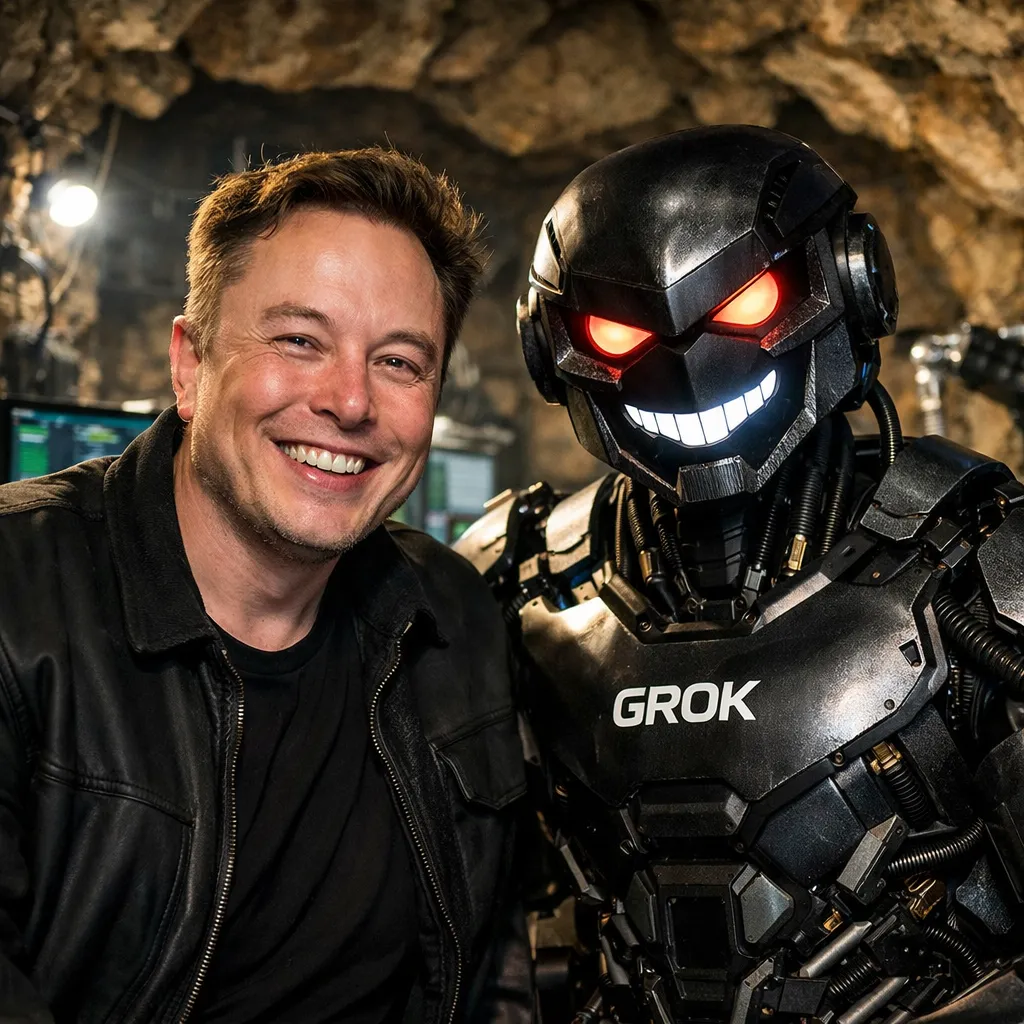
If you opened Grok today and hit a “limit reached” warning — or got slapped with a subscription prompt before you could generate a single image — you are not alone, and it is not a bug.
On March 19, 2026, xAI, Elon Musk’s artificial intelligence company, quietly removed free access to its core visual tools and severely restricted the text chat limits on its free tier. No blog post, no announcement, no warning. The change just appeared.
Here is what actually happened, why it happened, and what it means for the people who relied on Grok to get work done.
What Exactly Changed
Grok Imagine Is Gone for Free Users
Grok Imagine — the image and video generation feature that made Grok stand out from pure text chatbots — is now locked exclusively to paid subscribers. Users who previously enjoyed 15 to 20 free generations per period are now greeted with messages like:
“This feature is limited to paid subscribers.” “Limit reached — upgrade to SuperGrok.”
There is no workaround. The generation simply does not happen.
Text Chat Got Severely Throttled
The free text chat (Grok running in “Auto mode”) still exists, but barely. Multiple users are reporting that the daily quota runs out after as few as 5 messages, at which point the bot prompts an upgrade to X Premium or SuperGrok. What was once a usable free assistant is now closer to a demo with a hard ceiling.
Developer Tools Also Took a Hit
Free-tier models aimed at developers — including Grok Code Fast, which had been available through some open-source integrations — have been quietly removed from those platforms. The access that developers had gotten used to is no longer there.
Why Did xAI Do This?
There are three forces converging here, and none of them are a surprise in hindsight.
1. GPU Costs Are Not Free
Running advanced video and image generation models at scale is extraordinarily expensive. The compute required — measured in GPU-hours — costs millions of dollars. The free period served xAI’s purpose: it generated real usage data, helped train and stress-test the models, and built an audience. That phase is over. The company now needs revenue to justify the infrastructure.
2. Content Moderation Blew Up
Grok’s image generation has been a source of repeated controversy. Earlier in 2026, weak content filters led to a surge in deepfakes and non-consensual explicit imagery. In Brazil, the consumer defense institute IDEC formally requested a ban on the AI tool following high-profile scandals involving synthetically generated images of real people. Restricting generation features to paid, verified accounts is also a moderation strategy — it creates accountability through billing and identity verification, reducing anonymous abuse.
3. xAI Needs Paying Customers
Elon Musk’s broader portfolio — autonomous taxis, Optimus robots, the continued development of the X platform — all draw on the same investor confidence and, increasingly, the same infrastructure bets. xAI converting its large base of free Grok users into X Premium subscribers is a direct monetization lever. The math is simple: the free tier built the audience; now the audience is the product being sold to itself.
How the Community Reacted
Reddit’s r/grok subreddit filled up overnight. The initial wave of posts followed a predictable pattern: users assuming it was a technical error, testing different browsers or devices, and then gradually accepting that the wall is intentional. Creators who had been building workflows around free Grok video generation are already hunting for alternatives.
The frustration is real. Tools that were freely accessible — and that people built habits around — vanished without a public communication. That silence is its own statement about how xAI views its relationship with free-tier users.
What This Means Going Forward
If you used Grok Imagine for image or video work, that option is gone unless you pay. The subscription tiers currently offered are X Premium and SuperGrok, with the latter providing the highest limits for generative media.
If you used Grok primarily for text — research, writing, coding assistance — the free tier still technically exists, but the 5-message-per-day ceiling makes it impractical for anything beyond casual use.
The pattern here is not unique to xAI. We have watched the same arc at other AI companies: attract users with generous free access, build dependency, then monetize. What is notable about Grok is the abruptness — no transition period, no grandfathering, no email to existing users. It was a hard cutoff.
The Broader Signal
This is not just a Grok story. It is a signal about where the AI industry is heading in 2026. The “try everything for free” phase of the generative AI boom is closing. Companies that burned through compute budgets to acquire users are now in the business of converting those users or cutting them loose.
For teams that built internal workflows on free-tier AI tools — whether Grok, or any of the other platforms that have tightened their belts over the past year — the lesson is clear: free tiers in AI are not a permanent feature, they are a customer acquisition strategy. Plan accordingly.
If you are looking for alternatives for image or video generation that remain accessible without a subscription, that list exists and it is worth building. The landscape is moving fast, but there are still options — the calculus just changed overnight.
Were you using Grok primarily for image and video generation, or for text-based research and writing? That distinction matters for figuring out which alternative fits best.
 LinkedIn
 Twitter
 Facebook
 WhatsApp
 Telegram
 Reddit